

Milton model: možemo li NLP jezikom manipulirati drugima?
 Kata Živković4 min čitanja
Naša predavačica Matea Jukić, mag.logoped, NLP pract. i cert. medijatorica, u novom blogu otkriva što je Milton model, kada jezik može biti sredstvo utjecajnosti, a kada manipulacije.
Milton Erickson bio je poznati američki psihijatar i psiholog specijaliziran za kliničku hipnozu i obiteljsku terapiju te osnivač Američkog društva za kliničku hipnozu.
Specifičnost njegovog rada prepoznali su i osnivači NLP-a (Neurolingvističkog programiranja) Richard Bandler i John Grinder te kreirali model korištenja određenih pretpostavki i hipnotičkih jezičnih obrazaca u radu s klijentima koji se i danas koristi u različite svrhe.
M.Erickson (1901.-1980.)
NLP: svjesna i nesvjesna komunikacija
Osnovna podjela komunikacije je na verbalnu i neverbalnu.
Način na koji koristimo jezik uvelike utječe na naše vlastite emocije i stanje, no isto tako i na naše komunikacijske ishode.
Čak 93% naše komunikacije čini neverbalna komunikacija koja je najčešće nesvjesna.
Prisjetimo se koliko puta obraćamo pažnju na sadržaj onoga što govorimo pri tome potpuno zanemarujući način na koji to činimo.
Nesvjesni um pretražuje sjećanja i može pristupiti mislima i idejama koje su nam prije bile nedostupne na svjesnoj razini.
Erickson je vjerovao kako je samo dio naše komunikacije svjestan i polazeći iz te pretpostavke način na koji je koristio jezik, verbalno i neverbalno, odličan je primjer strateške uporabe jezika za promjenu stanja uma.
Milton model: hipnotički jezični obrasci
Milton model danas se naziva i „jezikom političara“, no njegovo je korištenje puno šire.
Hipnotički jezični obrasci su:
- pretpostavke postojanja
- pretpostavke svjesnosti i nužnosti (mogućnosti),
- temporalne pretpostavke
- inkluzivne i ekskluzivne pretpostavke
Sve te pretpostavke možemo čuti u različitim marketinškim kampanjama, obraćanju roditelja djeci, profesora učenicima, liječnicima svojim pacijentima te u gotovo svakoj komunikaciji koja uključuje rad s ljudima.
Primjeri navedenih pretpostavki:
- PRETPOSTAVKA POSTOJANJA
Upišite originalni NLP!
- PRETPOSTAVKA SVJESNOSTI
Nemoj slušati zvukove izvana!
- PRETPOSTAVKA NUŽNOSTI/MOGUĆNOSTI
Pitam se koliko brzo ćeš svladati Milton model?
Koliko ćeš se zadovoljnije osjećati kada to shvatiš?
- TEMPORALNA PRETPOSTAVKA
Nakon što napišeš zadaću, biraj hoćeš li u kino ili na sladoled.
- INKLUZIVNE I EKSLUZIVNE PRETPOSTAVKE
Želite li pauzu od 15 ili 20 minuta?
Milton model: manipulacija, sloboda ili hipnoza?
Sve navedene pretpostavke ostavljaju nam mogućnosti izbora i slobode, no je li izbor zaista stvaran?
Ako zaposlenik ima zakonsko pravo na pauzu od 30 minuta, a poslodavac mu nudi izbor između pauze koja će trajati 15 ili 20 minuta je li mu on ponudio stvaran izbor ili mu ga je zapravo uskratio?
Jednako tako, ako djetetu kažete da nakon što napiše domaću zadaću može birati želi li kino ili sladoled, ima li dijete pravo izbora želi li napisati zadaću?
Pretpostavka nužnosti (mogućnosti) pretpostavlja da će osoba svakako nešto učiniti (na primjer svladati Milton model) ili da će se osjećati na određeni način (zadovoljno), a jezičnom igrom sugovornik zamagljuje tu stvarnost.
Pretpostavku postojanja najčešće susrećemo u marketingu i prodaji gdje se za reklamiranje određenih proizvoda u sjeni pretpostavlja da su drugi proizvodi manje vrijedni od onoga kojeg mi reklamiramo. Ako u ovom slučaju prodajemo originalan NLP trening, onda je naglašena neizgovorena pretpostavka kako postoji i NLP koji nije originalan.
Je li moralno ispravno koristiti Milton model?
Kada osoba čuje pojmove poput programiranja uma, manipulacije i hipnoze može imati odbojnost prema njima jer se sve navedeno zaista može koristiti i u negativne svrhe.
Sigurno svi imamo iskustvo različitih poziva gdje nam se želi prodati određeni proizvod na način koji nam ne odgovara, možda su nam pojedine reklame odbojne, vjerojatno nam i govor političara nije najdraži.
Naš jezik ima ogromnu moć i kao što ga možemo koristiti u negativne ili neprihvatljive svrhe za naš ili društveni sustav vrijednosti, jednako tako ga možemo koristiti i u dobre svrhe.
Za kvalitetnije obraćanje svojoj publici, u radu s našim klijentima, odgoju djece ili učenika, reklamiranju naših proizvoda i usluga koji zaista vrijede. Ako tako razmišljamo, moralne dvojbe ne bi trebalo biti.
Ne budi manipulator, prepoznaj manipulaciju!
Odlična stvar koju nam omogućuje poznavanje različitih jezičnih modela, jednako tako i Milton modela, upravo je činjenica da možemo prepoznate one koji žele jezik koristiti u svrhu manipulacije u komunikaciji. Prepoznavajući takve sugovornike sami ćemo lakše preusmjeriti tijek razgovora, znat ćemo koje pitanje postaviti kako bismo brže i efikasnije postigli svoje komunikacijske ciljeve, razotkrit ćemo neistine i jezična iskrivljavanja.
Što je tvoja motivacija? Što te pokreće? Iskrena i dobronamjerna intrinzična motivacija dovest će te tamo gdje trebaš biti.
M. Erickson: „Najvažnija stvar u promjeni ljudskog ponašanja je motivacija osobe."
I za kraj: Sada nemoj slušati zvukove izvana. 😊
Ako želiš naučiti više o Milton modelu, NLP tehnikama i strategijama koje će ti pomoći ostaviti pozitivan utjecaj u privatnim i poslovnim odnosima, pretplati se i pogledaj snimku webinara NLP Strategije i tehnike.
Još s bloga
Sve objave
Čitanje u svakoj dobi: kako ponovno pronaći vrijeme za knjigu?
Koliko si puta rekao da nemaš vremena za čitanje? Knjiga čeka na polici, ti pogledaš naslovnicu i pomisliš: „Pročitat ću je kad uhvatim malo vremena.
More Than Money: Why Financial Literacy Is a Democratic Competence
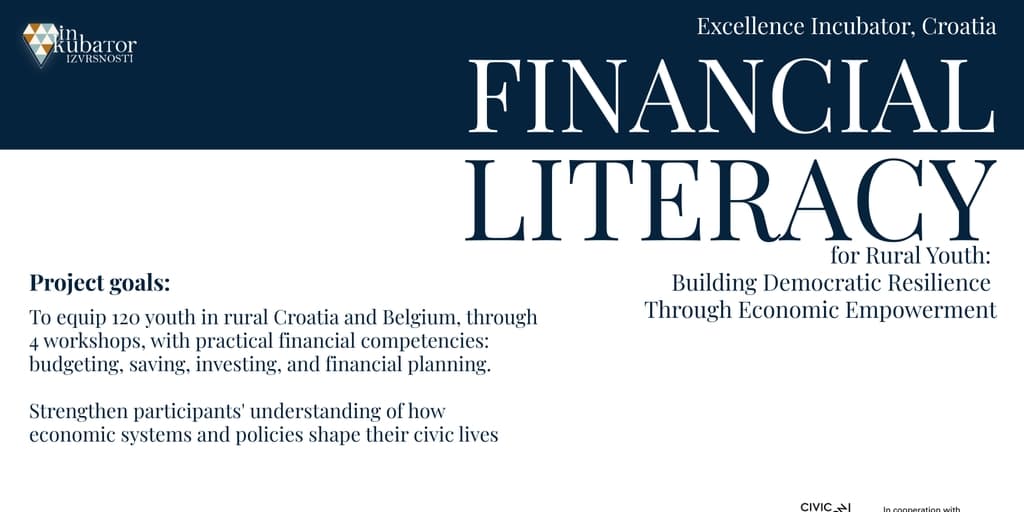
Reflections from the Financial and Economic Literacy NECE Lab, Vienna, 27–28 April 2026 When we talk about financial literacy, most people picture budgeting apps, savings accounts, and the fine print on a loan agreement. Useful things, but a narrow picture. Increasingly, educators, researchers, and policymakers across Europe are making a bigger claim: understanding money is not only a personal survival skill. It is a foundation of active citizenship and democratic resilience. That claim was the beating heart of the Financial and Economic Literacy NECE Lab in Vienna, a two-day gathering hosted by THE CIVICS Innovation Hub together with Znanje na djelu and the Erste Financial Life Park (FLiP), with the support of ERSTE Foundation. We were proud to be part of it, having Magdalena Basić Alando actively participate and present our own project, Financial Literacy for Rural Youth, and learning alongside practitioners from across the continent. This post pulls together what the research actually says, and what we saw play out in the room. The problem: too many young people can't apply what they know Start with the evidence. In the OECD's most recent international assessment of 15-year-olds, released in 2024, the picture is sobering: across the 14 OECD countries assessed, 18% of students on average do not have basic proficiency in financial literacy, meaning they cannot apply their knowledge to real-life situations involving financial decisions. The gap is not evenly distributed. Socio-economically disadvantaged students are over-represented among low performers, which risks entrenching inequality as those students become adults. In other words, the young people who most need economic confidence are the ones least likely to be given it — a pattern that maps neatly onto who feels shut out of public life more broadly. There is a hopeful flip side. Financial literacy and positive financial behaviour are linked: students with stronger skills behave more responsibly with money and are more forward-looking, with high performers markedly more likely than low performers to save. Skills, attitudes, and behaviour move together — which is exactly why how we teach matters as much as what we teach. The bigger claim: financial literacy feeds democratic participation Here is where the Vienna conversation went beyond personal finance. One of the Lab's expert speakers was Anna Lo Prete of the University of Turin, whose research sits right at this intersection — and whose work is among the clearest evidence we have on the question. Lo Prete's cross-country analysis documents a positive association between political participation — measured by the number of citizens voting in national elections — and the awareness of the trade-offs behind private and public decisions that basic financial education captures. Crucially, this is not just correlation dressed up: empirical models that control for a large set of other determinants of voter turnout indicate that financial literacy continues to have a positive and causal impact on electoral participation. Why would that be? The logic is intuitive once you see it. Understanding some economics and finance helps citizens grasp the reasons behind public intervention and weigh the pros and cons of policy proposals and agendas. A voter who understands taxation, public budgets, inflation, and debt is simply better equipped to evaluate the promises on a ballot — and harder to mislead. The catch: financial literacy alone isn't enough It would be too easy to conclude "teach kids about compound interest and democracy takes care of itself." The research is more demanding than that — and this nuance came up repeatedly in Vienna's group work. A recurring critique in the academic literature is that much mainstream financial education quietly frames citizens as consumers rather than participants. One influential analysis argues that dominant financial literacy programmes can end up promoting a limited, consumerist form of civic engagement, and that what is really needed is a critical, emancipatory civic financial literacy for an engaged citizenry able to extend and protect more robust conceptions of freedom and democracy. Scholars working on integrative economic education put the point sharply: financial literacy without civic competence remains a merely reactive skill rather than a source of genuine political agency, which is why financial literacy and civic competences should be understood as parts of a single integrative concept of economic education. The two only reach their full value when taught together — money knowledge that can read the system, not just cope with it. Europe is building the scaffolding None of this is happening in a vacuum. The policy architecture is catching up with the research. In 2023 the European Commission and the OECD jointly published a Financial Competence Framework for Children and Youth in the European Union. It is not only about interest rates and risk: alongside the four core content areas — money and transactions, planning and managing finances, risk and reward, and the financial landscape — the framework deliberately integrates cross-cutting dimensions including digital finance, sustainable finance, entrepreneurship, and citizenship. Citizenship is written into the framework by design. On the civic side, the Council of Europe's Reference Framework of Competences for Democratic Culture exists precisely to equip young people with the competences needed to defend and promote human rights, democracy and the rule of law, to act as active citizens, and to live peacefully together with others. Read the two frameworks side by side and the overlap is obvious: critical thinking, informed decision-making, and the confidence to participate. What this looks like in practice: rural youth and economic autonomy This is the gap our own project set out to close, and the reason we were presenting it in Vienna. Financial Literacy for Rural Youth: Building Democratic Resilience Through Economic Empowerment merges financial and civic education for an audience usually left out of both: young people in rural areas, who are systematically underrepresented in programmes that tend to be urban-centred. Working with our partners, the project equips rural GenZ participants in Croatia and Belgium with practical competences: budgeting, saving, investing, planning; through gamified, peer-to-peer, blended learning adapted to rural digital realities. But the design goes a step past personal finance, exactly along the lines the research recommends. Participants learn to analyse economic policies, financial products, and media narratives about money, so they can resist manipulation and make informed civic choices. The premise is that economic dependency and exclusion are themselves barriers to democratic participation, and that when young people understand how taxation, public budgets, and economic policy shape their own lives, they engage more meaningfully in democratic processes. A transnational peer exchange between Croatian and Belgian participants adds a cross-cultural, shared-European dimension, a small counterweight to the polarisation that tends to follow economic marginalisation. The pilot trainings in Croatia are already complete, with workshops in Belgium still ahead. And the methodology is being built to outlast the project and be shared amongst all stakeholders. Where the formal and non-formal worlds meet If there was one moment in Vienna that made the abstract concrete, it was the guided tour of the Erste Financial Life Park (FLiP), FLiP turns financial education into something you can walk through and touch: interactive stations where visitors make real-feeling budgeting decisions and immediately see the consequences. It is a vivid rebuttal to the idea that money education has to be dry. A theme the NECE Lab kept returning to, and one the research underlines, is the relationship between formal schooling and non-formal education. Classrooms provide reach and legitimacy; non-formal initiatives like ours provide the agility to reach underserved groups, experiment with gamified and peer-led methods, and adapt fast. The most promising path forward is not one or the other, but connective tissue between them: school systems that borrow the energy of non-formal approaches, and civic organisations whose toolkits can be picked up and used inside classrooms. The takeaway The case made in Vienna, and backed by the evidence, is straightforward but consequential. Financial literacy is not merely about helping individuals stay solvent. Done well, paired with civic competence rather than reduced to consumer advice, it strengthens people's capacity to understand the systems they live in, to resist manipulation, and to participate in the democratic decisions that shape their economic lives. In an era of rising costs, growing inequality, and declining trust in institutions, that capacity is not a luxury. It is infrastructure for democracy. We left Vienna grateful to all speakers for the intellectual grounding; to our fellow educators for the knowledge exchange and the good company; to the organisers: THE CIVICS Innovation Hub, Znanje na djelu, Erste Financial Life Park, and ERSTE Foundation, FLiP centre. The next chapter is being written in rural classrooms and community halls across Europe. We're glad to be part of it. Sources OECD (2024), PISA 2022 Results (Volume IV): How Financially Smart Are Students?, OECD Publishing. Lo Prete, A. (2024), Political participation and financial education: Understanding personal and collective trade-offs for a better citizenship, Economics Letters / ScienceDirect. Lo Prete, A., Financial education: From better personal finance to improved citizenship, Journal of Financial Literacy and Wellbeing, Cambridge Core. Arthur, C. (2012), Financial Literacy Education for Citizens: What Kind of Responsibility, Equality and Engagement?, Citizenship, Social and Economics Education (SAGE). Integrative Economic Education to Combine Citizenship Education and Financial Literacy (ResearchGate). European Union / OECD (2023), Financial Competence Framework for Children and Youth in the European Union, OECD Publishing. Council of Europe, Reference Framework of Competences for Democratic Culture (RFCDC).

Životni skript: zašto ponavljaš iste obrasce i kako ih promijeniti?
Jesi li ikad primijetio/la da u različitim vezama završavaš s istim tipom problema? Ili da na poslu uvijek ulazi u istu vrstu sukoba --- bez obzira...
