

U suvremenom društvu, gdje se često naglašava uspjeh, produktivnost i samokritika, koncept samoempatije ostaje u sjeni. Prihvaćanje sebe sa svim što jesam, svim strahovima, traumama, manama i vrlinama, ne znači samozadovoljstvo ili stagnaciju, već duboku unutarnju snagu potrebnu za rast i iscjeljenje.
Ovaj članak ti donosi 3 tehnike iz logoterapije i kognitivno-bihevioralne terapije (KBT) koje ti mogu pomoći u razvoju samoempatije.
Zašto je(Samo)empatija važna?
Samoempatija je sposobnost razumijevanja i prihvaćanja vlastitih emocija, misli i iskustava s istom nježnošću kojom bismo se odnosili prema voljenoj osobi.
Osobe koje prakticiraju samoempatiju imaju niže razine stresa, anksioznosti i depresije te veću otpornost na životne izazove.
Međutim, mnoga društva, uključujući i našu kulturu, još uvijek vrednuju izdržljivost i emocionalnu samodisciplinu, dok ranjivost i unutarnji rad na sebi često ostaju tabu teme. To može dovesti do potiskivanja emocija i unutarnje krutosti, što otežava proces iscjeljenja i nošenja s traumom.

Logoterapijski pristup samoempatiji
Logoterapija, koju je razvio Viktor Frankl, temelji se na pronalaženju smisla u životnim izazovima. Frankl je naglašavao da čak i u najtežim okolnostima možemo pronaći smisao koji nas vodi prema unutarnjoj snazi i prihvaćanju.
Neke od tehnika logoterapije koje ti mogu pomoći u razvoju samoempatije su:
🔹Derefleksija
Umjesto opsesivnog analiziranja vlastitih nedostataka, ova tehnika može ti pomoći da otkriješ u sebi jedninstvenu sposobnost da se “odvojiš” od sebe i svoje situacije te nadiđeš svoja ograničenja. To činiš usmjeravajući se na nešto izvan sebe ili na neku drugu osobu. Tijekom svog boravka u logoru, V. Frankl je primijetio da su zatvorenici koji su uspijevali usmjeriti pažnju izvan vlastite patnje – bilo kroz pomaganje drugima, prisjećanje na voljene osobe ili fokusiranje na neku višu svrhu – imali veću otpornost i lakše su se nosili s teškim uvjetima i patnjom.
🔹Paradoksna intencija
Suočavanje sa strahovima kroz humor i namjerno preuveličavanje vlastitih briga pomaže u smanjenju anksioznosti i samokritike. Paradoksalna intencija pokazala se iznimno učinkovitom u liječenju anksioznih poremećaja, fobija, nesanice i kompulzivnog ponašanja. Ključ je u tome da se osoba prestane boriti protiv straha i umjesto toga ga namjerno izazove, čime strah dugoročno gubi svoju moć.
🔹Stav prema patnji
Prihvaćanje boli i teških emocija kao dijela osobnog rasta omogućuje nam da ih vidimo kao neizbježan, ali smislen aspekt života. Taj proces se ne događa preko noći i često zahtijeva našu emocionalnu otvorenost, vanjsku podršku i strpljenje sa samim sobom.

Kognitivno-bihevioralna terapija (KBT) i tehnike samoempatije
KBT pomaže u prepoznavanju i mijenjanju negativnih obrazaca razmišljanja koji nas sprječavaju u razvoju samoempatije. Ključne tehnike uključuju:
🔹Kognitivno restrukturiranje
Prepoznavanje automatskih negativnih misli („Nisam dovoljno dobar“) i njihova zamjena realističnijim i suosjećajnijim stavovima („Imam pravo na greške i rast“).
Vježba: Prepoznavanje i preoblikovanje negativnih misli (3-5 minuta)
1️⃣ Identificiraj negativnu misao: Započni tako da prepoznaš neku negativnu misao koju si nedavno imao/la. To može biti nešto poput:
- "Nikada neću uspjeti."
- "Nisam dovoljno dobar/ra."
- "Svi misle da sam nesposoban/na."
2️⃣ Izazovi tu misao: Razmisli je li ta misao stvarno realna i osnovana. Postavi sebi pitanja kao što su:
- "Koji su stvarni dokazi da je ovo istina?"
- "Jesu li svi moji pokušaji bili neuspješni, ili postoji nešto što sam postigao/la?"
- "Postoji li druga moguća, pozitivnija interpretacija ove situacije?"
3️⃣ Preoblikuj misao: Na temelju odgovora na prethodna pitanja, pokušaj preoblikovati negativnu misao u nešto realističnije i ohrabrujuće. Na primjer:
- "Iako sam se suočio/la s izazovima, naučio/la sam iz tih iskustava i svakim danom postajem bolji/a."
- "Svi pravimo pogreške, to ne znači da nisam sposoban/na."
4️⃣ Ponovno promišljanje: Ponovi novu, pozitivniju misao nekoliko puta, stvarajući novi, zdraviji mentalni obrazac.
Zašto je ovo važno? Kognitivno rekonstruiranje pomaže ti prepoznati negativne automatske misli i preoblikovati ih u realističniji i uravnoteženiji pogled na svijet, što smanjuje stres i povećava emocionalnu otpornost.
🔹Mindfulness i svjesna prisutnost
Prisutnost u trenutku bez osuđivanja omogućuje bolji uvid u vlastite emocije i njihovo prihvaćanje.
Vježba: Misli kao oblaci na nebu (2-3 minute)
1️⃣ Zatvori oči i uzmi nekoliko sporih, dubokih udaha.
2️⃣ Zamisli plavo nebo, a svoje misli kao oblake koji prolaze.
3️⃣ Kad se pojavi neka misao, samo je primijeti, bez analize i prosuđivanja.
4️⃣ Vizualiziraj kako se ta misao polako kreće nebom – kao oblak koji dolazi i odlazi.
5️⃣ Ako osjetiš da te neka misao povlači, nježno se vrati slici neba i promatranju oblaka.
6️⃣ Nastavi nekoliko minuta, svjestan/svjesna da su misli prolazne – one dolaze, ali ih ne moraš zadržati.
Ova vježba pomaže ti da shvatiš kako misli nisu apsolutna istina, već nešto što prolazi i mijenja se. Na taj način razvijaš unutarnji mir i veću otpornost na stres.
🔹Vizualizacija
Zamišljaj sebe kao prijatelja kojem nudiš podršku. Takvo zamišljanje ti pomaže u razvijanju samoempatije.
Vježba: Budi svoj najbolji prijatelj (3-5 minuta)
1️⃣ Zatvori oči i udahni duboko nekoliko puta, opuštajući tijelo.
2️⃣ Zamisli osobu koju voliš i kojoj želiš najbolje – to može biti prijatelj, član obitelji... Osjeti toplinu i brigu koju osjećaš prema toj osobi.
3️⃣ Sada zamisli sebe u nekoj situaciji gdje se osjećaš tužno, nesigurno ili pod stresom.
4️⃣ Kako bi tješio/tješila prijatelja u toj situaciji? Koje riječi podrške bi mu rekao/la? Što bi učinio/la da mu pomogneš?
5️⃣ Sada preokreni perspektivu i kaži te iste riječi sebi – s ljubaznošću i razumijevanjem. Možeš si reći nešto poput:
- "Vidim da ti je teško, i to je u redu."
- "Svi griješe, to te ne čini manje vrijednim/om."
- "Tu sam za tebe, sve će biti dobro."
6️⃣ Polako udahni i vrati se u sadašnji trenutak, noseći sa sobom osjećaj suosjećanja prema sebi.

Društvene prepreke procesu iscjeljenja
U mnogim kulturama individualni rad na emocionalnom zdravlju često se smatra luksuzom ili čak slabošću.
Istraživanja pokazuju da u kulturama gdje se naglašava samodostatnost i potiskivanje emocija, pojedinci češće osjećaju sram ili krivnju kada se suočavaju s unutarnjim ranjivostima.
To može dovesti do izbjegavanja traženja pomoći, nedostatka podrške te osjećaja izolacije i odbačenosti.
Samoempatija nije znak slabosti, već hrabrosti. Primjenom logoterapijskih i kognitivno-bihevioralnih tehnika možemo naučiti prihvatiti vlastite emocije, razviti unutarnju otpornost i pronaći smisao čak i u najtežim trenucima. Istovremeno, potrebno je potaknuti širu društvenu promjenu koja će normalizirati emocionalno zdravlje i samoiscjeljenje kao neizostavan dio ljudskog iskustva.
Ako želiš naučiti više o samoempatiji i krenuti na put osobnog rasta i iscijeljenja pridruži nam se na edukaciji:
Empatija: samosuosjećanje i prihvaćanje sebe. Edukacija uživo | Inkubator izvrsnosti
Još s bloga
Sve objave
Čitanje u svakoj dobi: kako ponovno pronaći vrijeme za knjigu?
Koliko si puta rekao da nemaš vremena za čitanje? Knjiga čeka na polici, ti pogledaš naslovnicu i pomisliš: „Pročitat ću je kad uhvatim malo vremena.
More Than Money: Why Financial Literacy Is a Democratic Competence
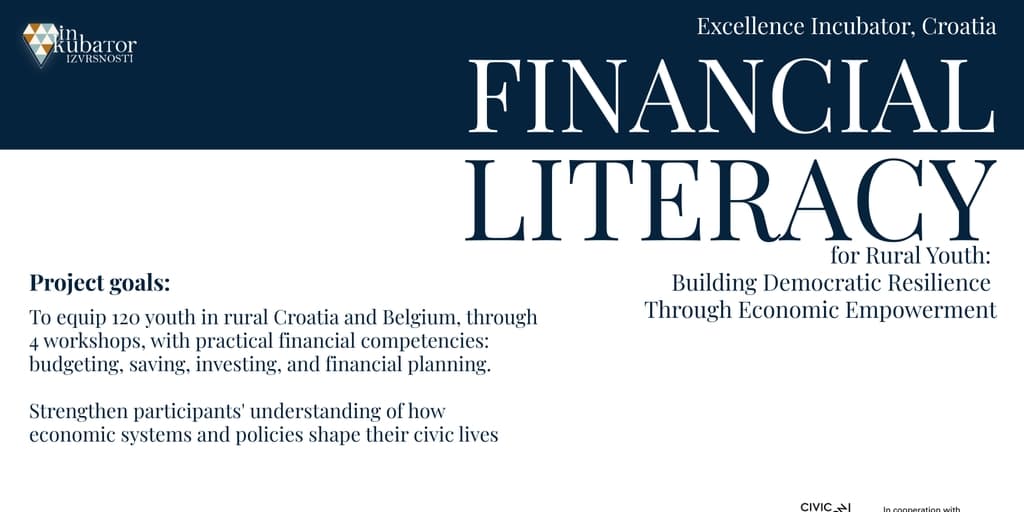
Reflections from the Financial and Economic Literacy NECE Lab, Vienna, 27–28 April 2026 When we talk about financial literacy, most people picture budgeting apps, savings accounts, and the fine print on a loan agreement. Useful things, but a narrow picture. Increasingly, educators, researchers, and policymakers across Europe are making a bigger claim: understanding money is not only a personal survival skill. It is a foundation of active citizenship and democratic resilience. That claim was the beating heart of the Financial and Economic Literacy NECE Lab in Vienna, a two-day gathering hosted by THE CIVICS Innovation Hub together with Znanje na djelu and the Erste Financial Life Park (FLiP), with the support of ERSTE Foundation. We were proud to be part of it, having Magdalena Basić Alando actively participate and present our own project, Financial Literacy for Rural Youth, and learning alongside practitioners from across the continent. This post pulls together what the research actually says, and what we saw play out in the room. The problem: too many young people can't apply what they know Start with the evidence. In the OECD's most recent international assessment of 15-year-olds, released in 2024, the picture is sobering: across the 14 OECD countries assessed, 18% of students on average do not have basic proficiency in financial literacy, meaning they cannot apply their knowledge to real-life situations involving financial decisions. The gap is not evenly distributed. Socio-economically disadvantaged students are over-represented among low performers, which risks entrenching inequality as those students become adults. In other words, the young people who most need economic confidence are the ones least likely to be given it — a pattern that maps neatly onto who feels shut out of public life more broadly. There is a hopeful flip side. Financial literacy and positive financial behaviour are linked: students with stronger skills behave more responsibly with money and are more forward-looking, with high performers markedly more likely than low performers to save. Skills, attitudes, and behaviour move together — which is exactly why how we teach matters as much as what we teach. The bigger claim: financial literacy feeds democratic participation Here is where the Vienna conversation went beyond personal finance. One of the Lab's expert speakers was Anna Lo Prete of the University of Turin, whose research sits right at this intersection — and whose work is among the clearest evidence we have on the question. Lo Prete's cross-country analysis documents a positive association between political participation — measured by the number of citizens voting in national elections — and the awareness of the trade-offs behind private and public decisions that basic financial education captures. Crucially, this is not just correlation dressed up: empirical models that control for a large set of other determinants of voter turnout indicate that financial literacy continues to have a positive and causal impact on electoral participation. Why would that be? The logic is intuitive once you see it. Understanding some economics and finance helps citizens grasp the reasons behind public intervention and weigh the pros and cons of policy proposals and agendas. A voter who understands taxation, public budgets, inflation, and debt is simply better equipped to evaluate the promises on a ballot — and harder to mislead. The catch: financial literacy alone isn't enough It would be too easy to conclude "teach kids about compound interest and democracy takes care of itself." The research is more demanding than that — and this nuance came up repeatedly in Vienna's group work. A recurring critique in the academic literature is that much mainstream financial education quietly frames citizens as consumers rather than participants. One influential analysis argues that dominant financial literacy programmes can end up promoting a limited, consumerist form of civic engagement, and that what is really needed is a critical, emancipatory civic financial literacy for an engaged citizenry able to extend and protect more robust conceptions of freedom and democracy. Scholars working on integrative economic education put the point sharply: financial literacy without civic competence remains a merely reactive skill rather than a source of genuine political agency, which is why financial literacy and civic competences should be understood as parts of a single integrative concept of economic education. The two only reach their full value when taught together — money knowledge that can read the system, not just cope with it. Europe is building the scaffolding None of this is happening in a vacuum. The policy architecture is catching up with the research. In 2023 the European Commission and the OECD jointly published a Financial Competence Framework for Children and Youth in the European Union. It is not only about interest rates and risk: alongside the four core content areas — money and transactions, planning and managing finances, risk and reward, and the financial landscape — the framework deliberately integrates cross-cutting dimensions including digital finance, sustainable finance, entrepreneurship, and citizenship. Citizenship is written into the framework by design. On the civic side, the Council of Europe's Reference Framework of Competences for Democratic Culture exists precisely to equip young people with the competences needed to defend and promote human rights, democracy and the rule of law, to act as active citizens, and to live peacefully together with others. Read the two frameworks side by side and the overlap is obvious: critical thinking, informed decision-making, and the confidence to participate. What this looks like in practice: rural youth and economic autonomy This is the gap our own project set out to close, and the reason we were presenting it in Vienna. Financial Literacy for Rural Youth: Building Democratic Resilience Through Economic Empowerment merges financial and civic education for an audience usually left out of both: young people in rural areas, who are systematically underrepresented in programmes that tend to be urban-centred. Working with our partners, the project equips rural GenZ participants in Croatia and Belgium with practical competences: budgeting, saving, investing, planning; through gamified, peer-to-peer, blended learning adapted to rural digital realities. But the design goes a step past personal finance, exactly along the lines the research recommends. Participants learn to analyse economic policies, financial products, and media narratives about money, so they can resist manipulation and make informed civic choices. The premise is that economic dependency and exclusion are themselves barriers to democratic participation, and that when young people understand how taxation, public budgets, and economic policy shape their own lives, they engage more meaningfully in democratic processes. A transnational peer exchange between Croatian and Belgian participants adds a cross-cultural, shared-European dimension, a small counterweight to the polarisation that tends to follow economic marginalisation. The pilot trainings in Croatia are already complete, with workshops in Belgium still ahead. And the methodology is being built to outlast the project and be shared amongst all stakeholders. Where the formal and non-formal worlds meet If there was one moment in Vienna that made the abstract concrete, it was the guided tour of the Erste Financial Life Park (FLiP), FLiP turns financial education into something you can walk through and touch: interactive stations where visitors make real-feeling budgeting decisions and immediately see the consequences. It is a vivid rebuttal to the idea that money education has to be dry. A theme the NECE Lab kept returning to, and one the research underlines, is the relationship between formal schooling and non-formal education. Classrooms provide reach and legitimacy; non-formal initiatives like ours provide the agility to reach underserved groups, experiment with gamified and peer-led methods, and adapt fast. The most promising path forward is not one or the other, but connective tissue between them: school systems that borrow the energy of non-formal approaches, and civic organisations whose toolkits can be picked up and used inside classrooms. The takeaway The case made in Vienna, and backed by the evidence, is straightforward but consequential. Financial literacy is not merely about helping individuals stay solvent. Done well, paired with civic competence rather than reduced to consumer advice, it strengthens people's capacity to understand the systems they live in, to resist manipulation, and to participate in the democratic decisions that shape their economic lives. In an era of rising costs, growing inequality, and declining trust in institutions, that capacity is not a luxury. It is infrastructure for democracy. We left Vienna grateful to all speakers for the intellectual grounding; to our fellow educators for the knowledge exchange and the good company; to the organisers: THE CIVICS Innovation Hub, Znanje na djelu, Erste Financial Life Park, and ERSTE Foundation, FLiP centre. The next chapter is being written in rural classrooms and community halls across Europe. We're glad to be part of it. Sources OECD (2024), PISA 2022 Results (Volume IV): How Financially Smart Are Students?, OECD Publishing. Lo Prete, A. (2024), Political participation and financial education: Understanding personal and collective trade-offs for a better citizenship, Economics Letters / ScienceDirect. Lo Prete, A., Financial education: From better personal finance to improved citizenship, Journal of Financial Literacy and Wellbeing, Cambridge Core. Arthur, C. (2012), Financial Literacy Education for Citizens: What Kind of Responsibility, Equality and Engagement?, Citizenship, Social and Economics Education (SAGE). Integrative Economic Education to Combine Citizenship Education and Financial Literacy (ResearchGate). European Union / OECD (2023), Financial Competence Framework for Children and Youth in the European Union, OECD Publishing. Council of Europe, Reference Framework of Competences for Democratic Culture (RFCDC).
Životni skript: zašto ponavljaš iste obrasce i kako ih promijeniti?
Jesi li ikad primijetio/la da u različitim vezama završavaš s istim tipom problema? Ili da na poslu uvijek ulazi u istu vrstu sukoba --- bez obzira...
