

Toksična komunikacija: 4 tehnike kako se zaštititi bez ulaska u konflikt
Statistike su prilično jasne — 75 % zaposlenih je u svom životu iskusilo toksično radno okruženje. Gotovo polovica ljudi identificira se kao people-pleaseri, a čak 60 % ima poteškoća s postavljanjem osobnih granica.
Ako si ikada iz razgovora s kolegom, šefom ili bliskom osobom izašao/la s osjećajem nelagode, iscrpljenosti ili sumnje u vlastitu percepciju — vjerojatno si se susreo/la s nezdravom komunikacijom. I nisi sam/a u tome.
Dobra vijest? Toksična komunikacija nije nešto što moraš trpjeti. Postoje konkretne tehnike koje ti mogu pomoći da prepoznaš manipulativne obrasce, postaviš granice i zaštitiš sebe — bez spuštanja na razinu agresivne ili pasivne komunikacije.
U ovom članku donosimo ti 4 praktične tehnike koje možeš primijeniti već danas.
Kako prepoznati nezdrav obrazac?
Prije nego što kreneš s tehnikama, važno je razumjeti što toksična komunikacija zapravo jest. Nezdrava komunikacija je svaka komunikacija nakon koje se osjećaš lošije — komunikacija u kojoj se krše tvoje granice, ignoriraju tvoje emocije ili narušava tvoje dostojanstvo.
Ključni znakovi prepoznavanja:
- Neravnoteža moći — osjećaš da u odnosu nisi ravnopravan/ravnopravna
- Nedostatak poštovanja — ne mora biti izrečen riječima, vidiš ga u načinu na koji se osoba ophodi prema tebi
- Ignoriranje tvojih potreba — uvijek ti uskačeš i zadovoljavaš drugu stranu
- Neugodni osjećaji — ako ti je „feeling" nakon razgovora s tom osobom neugodan, ako osjećaš nelagodu, strah ili sumnju u sebe, to je snažan pokazatelj
Taj unutarnji osjećaj te jako rijetko vara. Ako hodaš po jajima oko neke osobe i konstantno paziš na svaku riječ — to je jedan od najjasnijih znakova da se radi o nezdravom odnosu.
Toksični obrasci koje trebaš poznavati
U poslovnom okruženju toksična komunikacija najčešće se manifestira kroz mikromenadžment (pretjerano nadziranje svakog detalja tvog posla), prebacivanje krivnje, javno kritiziranje i uskraćivanje informacija.
Istraživanja pokazuju da je 83 % radnika barem jednom u životu primilo pasivno-agresivnu poruku na poslu. Pasivna agresija je onaj perfidni, podmukli oblik — osoba te neće otvoreno napasti, ali iz konteksta rečenice jasno je da se iza ciničnog komentara krije želja da te se degradira.
U privatnim odnosima obrasci su drugačiji, ali jednako štetni: pretjerana kontrola, emocionalna ucjena („Ako me stvarno voliš, ostat ćeš..."), stalno kritiziranje i kažnjavanje šutnjom (silent treatment).
Istraživanja iz područja psihologije pokazuju da toksični odnosi mogu povećati simptome anksioznosti za čak 50 %.
Četiri faze toksičnog odnosa
Toksični odnosi ne počinju s manipulacijom. Razvijaju se postupno, kroz četiri faze:
- Faza medenog mjeseca — na početku je sve divno. Osoba se prikazuje u najboljem svjetlu.
- Faza napetosti — kreću sitne kritike, iritabilnost. Počinješ osjećati da „hodaš po jajima."
- Faza incidenta — dolazi do otvorenog ispoljavanja toksičnih obrazaca: gaslighting, kontrola, manipulacija.
- Faza pomirenja — slijede isprike, obećanja i vraćanje na staro ponašanje.
Problem je u tome što ovaj ciklus stvara ovisnost i nadu u promjenu, što otežava izlazak iz odnosa. Svako pomirenje donosi privid da će biti bolje, a u stvarnosti se obrazac samo ponavlja.
Glavne vrste manipulacije
Prije nego prijeđemo na tehnike obrane, dobro je poznavati najčešće oblike manipulacije:
- Gaslighting — uvjeravanje u suprotno. Osoba negira da se nešto dogodilo, govori ti da pretjeruješ ili dramatiziraš, sve dok ne posumnjaš u vlastitu percepciju stvarnosti. Statistike pokazuju da je čak 50 % radnika u dobi od 18 do 54 godine iskusilo gaslighting na poslu.
- Prebacivanje krivnje — korištenje krivnje kao alata. Klasična rečenica: „Nakon svega što sam učinio za tebe, ti meni ovako vraćaš." Emocije nisu valuta za trgovanje.
- Love bombing — obasipanje komplimentima i pažnjom na početku odnosa. Cilj je stvoriti ovisnost o sebi, nakon čega počinje manipulacija.
- Silent treatment — kažnjavanje šutnjom. Možda i najopasniji oblik jer nemaš nikakvu informaciju s kojom možeš dalje upravljati

Tehnika 1: STOP — reagiraj bez impulsa
Kad te nešto takne u živac, prirodna reakcija je odgovoriti odmah. No upravo tu leži zamka. Tehnika STOP pomaže ti da zaustišaviš automatsku reakciju i odgovoriš smisleno:
- S — Stani. Ne reagiraj odmah. Udahni. Koliko god to bilo teško, daj si barem nekoliko sekundi.
- T — Takni tlo. Ostani prisutan/prisutna. Postani svjestan/svjesna emocije koju je druga osoba aktivirala u tebi.
- O — Opažaj. Što se zapravo događa? Koji je cilj druge osobe? Ima li dobru namjeru pa se loše izrazila, ili se radi o svjesnoj manipulaciji?
- P — Postavi granicu. Odgovori mirno, jasno i asertivno.
Primjer rečenice: „Razumijem tvoje stajalište. Moje iskustvo je drugačije. Svatko ima pravo na svoje viđenje stvari — i u redu je da se ne slažemo."
Zlatni savjet: ako osjećaš da si emocionalno nabijen/nabijena, bolje je ne reagirati uopće. Izađi iz prostorije. Nemoj slati mail dok si ljut/ljuta. Nekim ljudima treba više vremena da se ohlade i to je potpuno u redu.
Tehnika 2: Pokvarena ploča — ostani dosljedan/dosljedna
Ova tehnika je savršena za manipulatore i osobe koje te pokušavaju nagovoriti na nešto. Princip je jednostavan: mirno i dosljedno ponavljaš svoju izjavu ili odluku, bez ulaženja u daljnje rasprave.
Primjer:
Šef: „Zašto ne možeš sam ovaj put ostati duže?"
Ti: „Danas ne mogu ostati duže."
Šef: „Ali svi drugi ostaju."
Ti: „Razumijem. Danas, nažalost, nisam u mogućnosti ostati. Imam obaveze."
Zašto ovo djeluje? Iz dva razloga. Prvo, ne daješ nikakav dodatan materijal koji bi osoba mogla iskoristiti protiv tebe. Drugo, ostaješ dosljedan/dosljedna sebi — a dosljednost je najjači signal manipulatoru da s tobom ne može po svom.
Tehnika 3: Čarobna formula za granice
Granice nisu sebične. Granice nisu egoistične. Granice su čin samopouzdanja.
Zamisli svoj život kao grad unutar utvrde. Granice su tvoji bedemi. Svakodnevne situacije s toksičnim ljudima su strijele, koplja i topovske kugle koje lete prema tebi. Tvoj zadatak je da imaš čvrste bedeme — ne da bi se hvalio/la njima, nego da bi sačuvao/la ono što je unutra.
Ako ti ne postaviš granice, nitko drugi ih neće postaviti umjesto tebe.
Koristi ovu jednostavnu formulu:
„Kada ti [ponašanje], ja se osjećam [emocija]. Trebam/Molim te da [apel]."
Primjer: „Kada mi šalješ poslovne poruke nakon deset navečer, osjećam se pod pritiskom. Molim te da me u to vrijeme kontaktiraš samo u hitnim slučajevima."
Tri elementa koja trebaš zapamtiti: što se dogodilo, kako se osjećaš i što konkretno moliš drugu osobu.
Tehnika 4: Snaga izgovorene riječi
Ovo je možda najjednostavnija, a istovremeno najmoćnija tehnika od svih.
Neuroznanost je potvrdila da kada nešto izgovorimo naglas, mozak tome automatski pridaje puno veću važnost nego kad to samo pomislimo. A kad imenujemo emociju — „Ja se sada osjećam ljuto" ili „Ja sam razočaran/a" — emocionalni naboj te emocije se smanjuje.
Zato svaki asertivni odgovor koji si formulirao/la — izgovori naglas. Ponovi ga više puta. Neka ti prijeđe u naviku.
Sjetii se kad si prvi put sjeo/sjela za volan automobila. Nisi znao/la gdje je kvačilo, gdje je kočnica, koja je prva brzina. Danas to radiš automatski. Isto vrijedi i za asertivnost — može ti postati navika i automatizam, ali samo ako vježbaš.
Što ponijeti sa sobom?
Evo kratkog podsjetnika:
- Prepoznavanje je prvi korak. Ako ti je neka osoba teška, razjasni sam/a sa sobom zašto. Koji njezini obrasci ponašanja te „trigeriraju"? Koje tvoje granice ta osoba ruši? Kad to staviš na papir, komunikacija automatski postaje jednostavnija.
- Asertivnost je vještina, a ne urođena osobina. Formula „kada ti — ja se osjećam — trebam te da" može postati tvoj automatizam.
- Granice su tvoje pravo i tvoja obveza. Nema ničeg sebičnog u tome da zaštititš sebe.
- „Ne" je potpuna rečenica. Ne moraš se opravdavati, objašnjavati ni ispričavati zato što si se zauzeo/la za sebe.
I jedno važno upozorenje: ako se osjećaš zarobljeno u nekom odnosu, ako imaš fizičke simptome stresa poput nesanice ili bolova u želucu, ako si već pokušao/la postaviti granice, a druga osoba ih uvijek sruši — to je znak da bi ti mogla koristiti stručna pomoć. Razgovor s psihologom, psihoterapeutom ili čak dobrim prijateljem može napraviti veliku razliku.
Želiš naučiti kako komunicirati jasno, asertivno i bez nepotrebnog stresa?
Još s bloga
Sve objave
Čitanje u svakoj dobi: kako ponovno pronaći vrijeme za knjigu?
Koliko si puta rekao da nemaš vremena za čitanje? Knjiga čeka na polici, ti pogledaš naslovnicu i pomisliš: „Pročitat ću je kad uhvatim malo vremena.
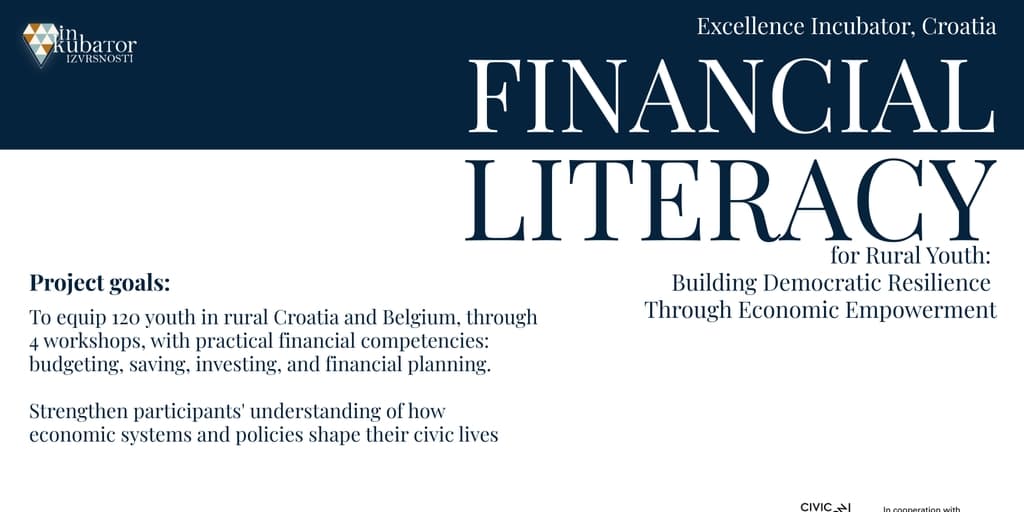
More Than Money: Why Financial Literacy Is a Democratic Competence
Reflections from the Financial and Economic Literacy NECE Lab, Vienna, 27–28 April 2026 When we talk about financial literacy, most people picture budgeting apps, savings accounts, and the fine print on a loan agreement. Useful things, but a narrow picture. Increasingly, educators, researchers, and policymakers across Europe are making a bigger claim: understanding money is not only a personal survival skill. It is a foundation of active citizenship and democratic resilience. That claim was the beating heart of the Financial and Economic Literacy NECE Lab in Vienna, a two-day gathering hosted by THE CIVICS Innovation Hub together with Znanje na djelu and the Erste Financial Life Park (FLiP), with the support of ERSTE Foundation. We were proud to be part of it, having Magdalena Basić Alando actively participate and present our own project, Financial Literacy for Rural Youth, and learning alongside practitioners from across the continent. This post pulls together what the research actually says, and what we saw play out in the room. The problem: too many young people can't apply what they know Start with the evidence. In the OECD's most recent international assessment of 15-year-olds, released in 2024, the picture is sobering: across the 14 OECD countries assessed, 18% of students on average do not have basic proficiency in financial literacy, meaning they cannot apply their knowledge to real-life situations involving financial decisions. The gap is not evenly distributed. Socio-economically disadvantaged students are over-represented among low performers, which risks entrenching inequality as those students become adults. In other words, the young people who most need economic confidence are the ones least likely to be given it — a pattern that maps neatly onto who feels shut out of public life more broadly. There is a hopeful flip side. Financial literacy and positive financial behaviour are linked: students with stronger skills behave more responsibly with money and are more forward-looking, with high performers markedly more likely than low performers to save. Skills, attitudes, and behaviour move together — which is exactly why how we teach matters as much as what we teach. The bigger claim: financial literacy feeds democratic participation Here is where the Vienna conversation went beyond personal finance. One of the Lab's expert speakers was Anna Lo Prete of the University of Turin, whose research sits right at this intersection — and whose work is among the clearest evidence we have on the question. Lo Prete's cross-country analysis documents a positive association between political participation — measured by the number of citizens voting in national elections — and the awareness of the trade-offs behind private and public decisions that basic financial education captures. Crucially, this is not just correlation dressed up: empirical models that control for a large set of other determinants of voter turnout indicate that financial literacy continues to have a positive and causal impact on electoral participation. Why would that be? The logic is intuitive once you see it. Understanding some economics and finance helps citizens grasp the reasons behind public intervention and weigh the pros and cons of policy proposals and agendas. A voter who understands taxation, public budgets, inflation, and debt is simply better equipped to evaluate the promises on a ballot — and harder to mislead. The catch: financial literacy alone isn't enough It would be too easy to conclude "teach kids about compound interest and democracy takes care of itself." The research is more demanding than that — and this nuance came up repeatedly in Vienna's group work. A recurring critique in the academic literature is that much mainstream financial education quietly frames citizens as consumers rather than participants. One influential analysis argues that dominant financial literacy programmes can end up promoting a limited, consumerist form of civic engagement, and that what is really needed is a critical, emancipatory civic financial literacy for an engaged citizenry able to extend and protect more robust conceptions of freedom and democracy. Scholars working on integrative economic education put the point sharply: financial literacy without civic competence remains a merely reactive skill rather than a source of genuine political agency, which is why financial literacy and civic competences should be understood as parts of a single integrative concept of economic education. The two only reach their full value when taught together — money knowledge that can read the system, not just cope with it. Europe is building the scaffolding None of this is happening in a vacuum. The policy architecture is catching up with the research. In 2023 the European Commission and the OECD jointly published a Financial Competence Framework for Children and Youth in the European Union. It is not only about interest rates and risk: alongside the four core content areas — money and transactions, planning and managing finances, risk and reward, and the financial landscape — the framework deliberately integrates cross-cutting dimensions including digital finance, sustainable finance, entrepreneurship, and citizenship. Citizenship is written into the framework by design. On the civic side, the Council of Europe's Reference Framework of Competences for Democratic Culture exists precisely to equip young people with the competences needed to defend and promote human rights, democracy and the rule of law, to act as active citizens, and to live peacefully together with others. Read the two frameworks side by side and the overlap is obvious: critical thinking, informed decision-making, and the confidence to participate. What this looks like in practice: rural youth and economic autonomy This is the gap our own project set out to close, and the reason we were presenting it in Vienna. Financial Literacy for Rural Youth: Building Democratic Resilience Through Economic Empowerment merges financial and civic education for an audience usually left out of both: young people in rural areas, who are systematically underrepresented in programmes that tend to be urban-centred. Working with our partners, the project equips rural GenZ participants in Croatia and Belgium with practical competences: budgeting, saving, investing, planning; through gamified, peer-to-peer, blended learning adapted to rural digital realities. But the design goes a step past personal finance, exactly along the lines the research recommends. Participants learn to analyse economic policies, financial products, and media narratives about money, so they can resist manipulation and make informed civic choices. The premise is that economic dependency and exclusion are themselves barriers to democratic participation, and that when young people understand how taxation, public budgets, and economic policy shape their own lives, they engage more meaningfully in democratic processes. A transnational peer exchange between Croatian and Belgian participants adds a cross-cultural, shared-European dimension, a small counterweight to the polarisation that tends to follow economic marginalisation. The pilot trainings in Croatia are already complete, with workshops in Belgium still ahead. And the methodology is being built to outlast the project and be shared amongst all stakeholders. Where the formal and non-formal worlds meet If there was one moment in Vienna that made the abstract concrete, it was the guided tour of the Erste Financial Life Park (FLiP), FLiP turns financial education into something you can walk through and touch: interactive stations where visitors make real-feeling budgeting decisions and immediately see the consequences. It is a vivid rebuttal to the idea that money education has to be dry. A theme the NECE Lab kept returning to, and one the research underlines, is the relationship between formal schooling and non-formal education. Classrooms provide reach and legitimacy; non-formal initiatives like ours provide the agility to reach underserved groups, experiment with gamified and peer-led methods, and adapt fast. The most promising path forward is not one or the other, but connective tissue between them: school systems that borrow the energy of non-formal approaches, and civic organisations whose toolkits can be picked up and used inside classrooms. The takeaway The case made in Vienna, and backed by the evidence, is straightforward but consequential. Financial literacy is not merely about helping individuals stay solvent. Done well, paired with civic competence rather than reduced to consumer advice, it strengthens people's capacity to understand the systems they live in, to resist manipulation, and to participate in the democratic decisions that shape their economic lives. In an era of rising costs, growing inequality, and declining trust in institutions, that capacity is not a luxury. It is infrastructure for democracy. We left Vienna grateful to all speakers for the intellectual grounding; to our fellow educators for the knowledge exchange and the good company; to the organisers: THE CIVICS Innovation Hub, Znanje na djelu, Erste Financial Life Park, and ERSTE Foundation, FLiP centre. The next chapter is being written in rural classrooms and community halls across Europe. We're glad to be part of it. Sources OECD (2024), PISA 2022 Results (Volume IV): How Financially Smart Are Students?, OECD Publishing. Lo Prete, A. (2024), Political participation and financial education: Understanding personal and collective trade-offs for a better citizenship, Economics Letters / ScienceDirect. Lo Prete, A., Financial education: From better personal finance to improved citizenship, Journal of Financial Literacy and Wellbeing, Cambridge Core. Arthur, C. (2012), Financial Literacy Education for Citizens: What Kind of Responsibility, Equality and Engagement?, Citizenship, Social and Economics Education (SAGE). Integrative Economic Education to Combine Citizenship Education and Financial Literacy (ResearchGate). European Union / OECD (2023), Financial Competence Framework for Children and Youth in the European Union, OECD Publishing. Council of Europe, Reference Framework of Competences for Democratic Culture (RFCDC).
Životni skript: zašto ponavljaš iste obrasce i kako ih promijeniti?
Jesi li ikad primijetio/la da u različitim vezama završavaš s istim tipom problema? Ili da na poslu uvijek ulazi u istu vrstu sukoba --- bez obzira...
